 Moed
MoedWork out the yahrzeit
The rules
The yahrzeit falls on the Hebrew date of death each year. If the death occurred after sunset, it counts for the next Hebrew day.
Death in Adar of a regular year: in a leap year, which has two months of Adar, the Shulchan Aruch sets the yahrzeit in Adar II, the Sephardic custom; the Rema sets it in Adar I, the Ashkenazi custom, and some keep both (Orach Chayim 568:7). The dates here follow the Rema, like the Moed app and Hebcal; in those years the Adar II date is given just below. Death in Adar I or Adar II of a leap year: the yahrzeit stays in that month in leap years and falls in Adar in regular years.
Death on the 30th of Cheshvan or Kislev: in years when that month has only 29 days, it is marked, by custom, on the last day of the previous month (Rema, Yoreh De’ah 402:12).
For a halakhic ruling, ask your rabbi.
Frequently asked questions
What is a yahrzeit?
Yahrzeit (Yiddish for “time of the year”) is the Hebrew anniversary of a death. A candle is lit, Kaddish is said, Torah is studied in memory, and many fast or give to charity.
When is the yahrzeit candle lit?
On the evening before the day of the yahrzeit, before sunset when it falls on Shabbat or a holiday: the Hebrew day begins at sunset. The table gives this evening.
Is the yahrzeit always on the same civil date?
No: it follows the Hebrew calendar, so its civil date changes each year.
These times on your iPhone
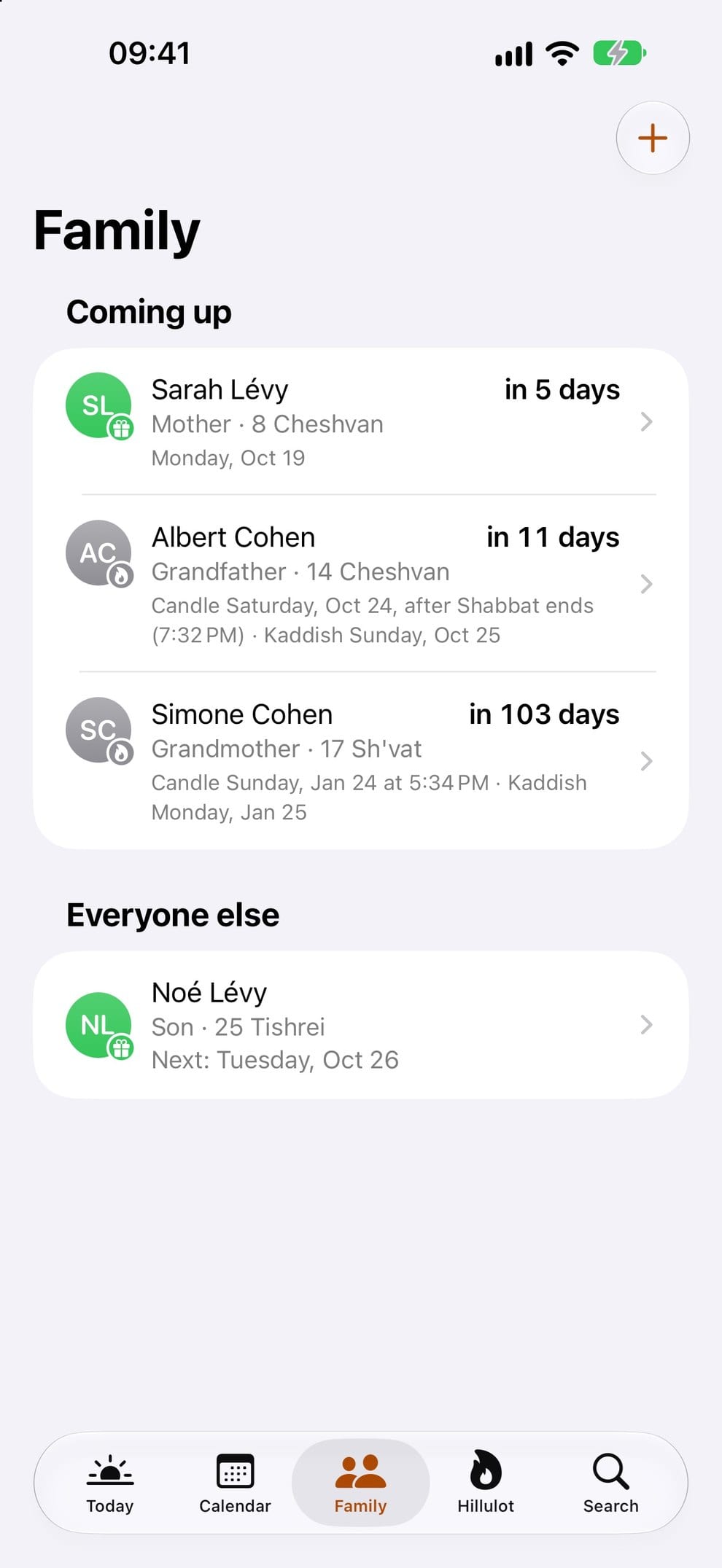
Add the person under “Family”: the app works out the yahrzeit every year and reminds you the evening before.

Free, with no ads and no in-app purchases.
Your data stays on your phone.