 Moed
Behar
- Number
- 32 / 54
- Book
- Leviticus
- Haftarah
- Jeremiah 32:6 – 27
References: Hebcal (@hebcal/leyning). Text: Sefaria.
Parashat Behar summary
Parashat Behar has 57 verses.
At Mount Sinai, Hashem gives Moshe the laws of the seventh year: the land rests, with no sowing or pruning of the vineyard, and what it yields on its own feeds all who live there (25:1-7).
Next come the laws of the jubilee. After seven cycles of seven years, the shofar sounds on Yom Kippur; in the fiftieth year, freedom is proclaimed and each person returns to his property and family (25:8-13). Land sales are reckoned by the years remaining until the jubilee (25:14-17). Hashem promises a sufficient harvest in the sixth year, and recalls that the land is His (25:18-24).
The text then covers the redemption of fields and houses, with a special case for the cities of the Levites (25:25-34). It calls for supporting a brother who has become poor and lending to him without interest (25:35-38). A Hebrew who sells himself out of poverty is treated as a hired worker and goes free at the jubilee, and he may be redeemed if sold to a foreigner (25:39-55). The portion closes with the prohibition of idols, Shabbat and reverence for the sanctuary (26:1-2).
Haftarah: Jeremiah 32:6 – 27. During the siege of Jerusalem, the prophet Jeremiah buys the field of his cousin Chanamel in Anatot, a sign that fields will again be bought in the land.
Summary written from the text of the Torah (chapter and verse in parentheses). References: Hebcal and Sefaria.
Upcoming readings
- Saturday, May 22, 2027
- Saturday, May 20, 2028read with Bechukotai
- Saturday, May 12, 2029Diaspora : May 12, 2029 · Israel : May 5, 2029 · read with Bechukotai
- Saturday, May 18, 2030
- Saturday, May 17, 2031read with Bechukotai
When Israel and the diaspora do not read the same portion (after the eighth day of Passover or Shavuot falls on Shabbat), the two columns differ.
Frequently asked questions
Is Behar read together with another portion?
Some years Behar is read together with the neighboring portion; the date is then the Shabbat of the double reading.
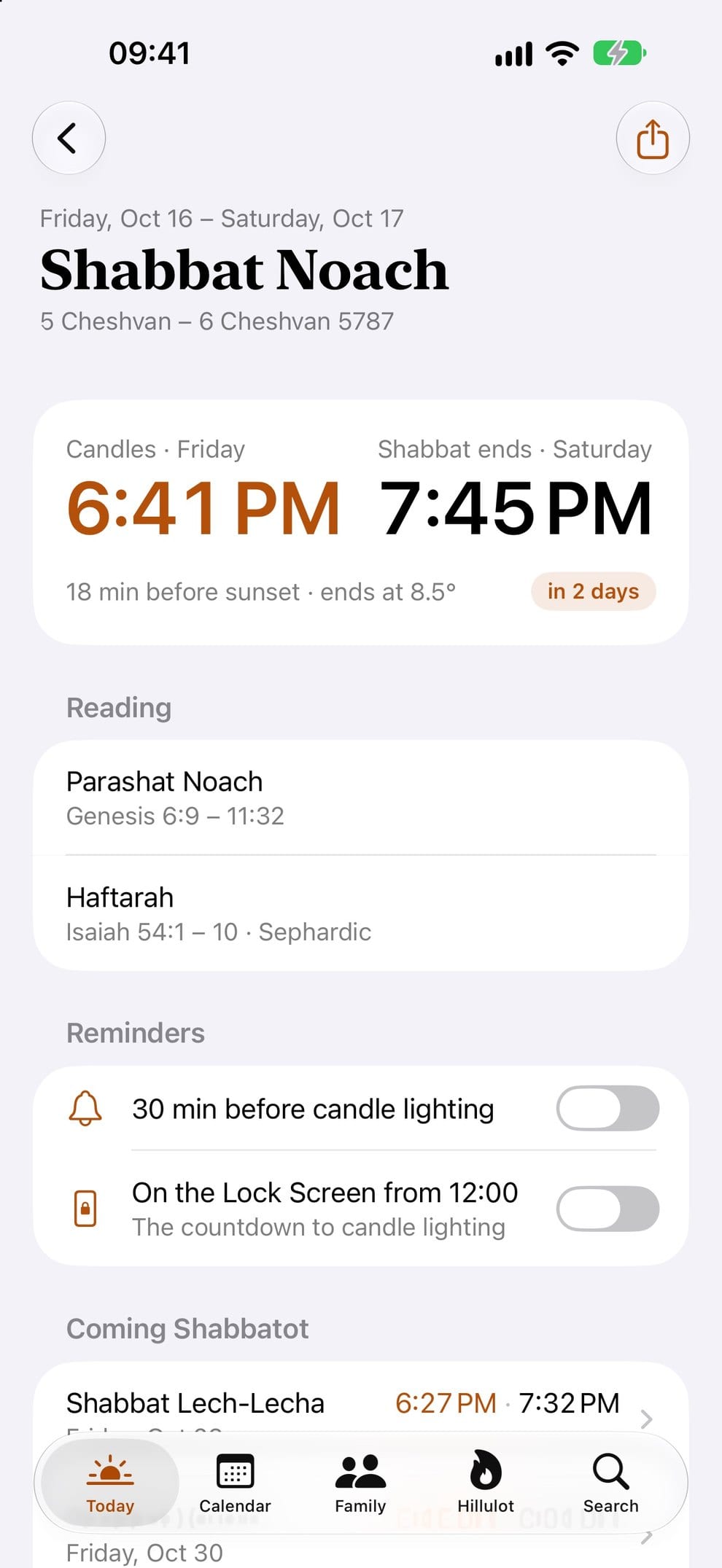
These times on your iPhone
This week’s portion, the haftarah and your city’s candle-lighting time, every Friday, on your iPhone.

Free, with no ads and no in-app purchases.
Your data stays on your phone.